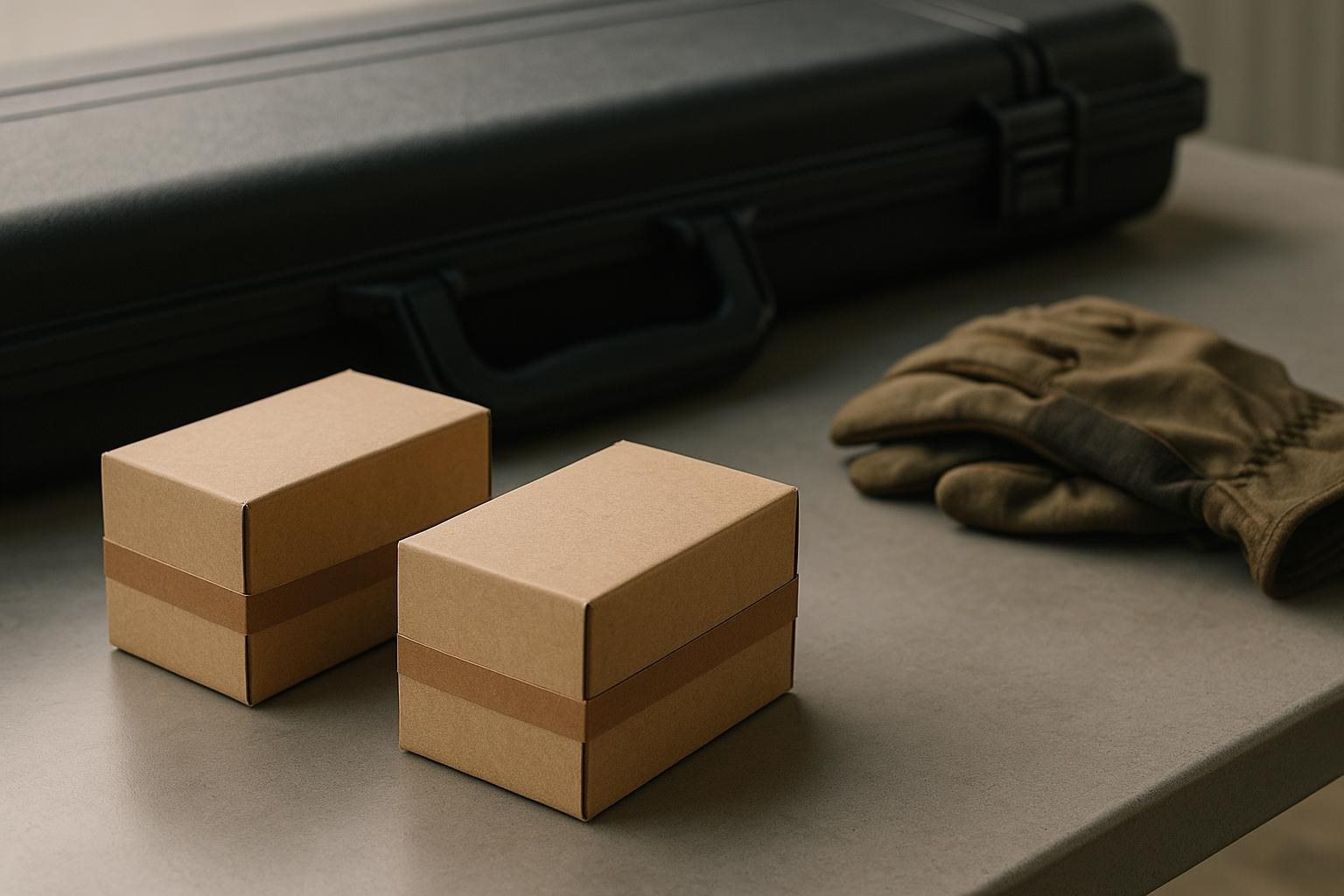
Creating a shared closet, mudroom or gear room for hunting and shooting can present challenges when left to casual storage. As products which contain smoke, solvents, oil, and others release odors into the air over time these can impart themselves to adjacent gear. In addition, clothing which has become damp in storage can create 'hide' areas for tiny pests to invade and also hide damage to items stored beneath. Further, crowded cases can hide damage to stored gear as well. A few simple boundaries will serve to organize your gear to find it easily, to protect scent control, and safety checks.
Start with a simple division of the room
Separate by use. The hunting clothing should be stored in a clean, dry space that is separate from the firearm cleaning supplies, used targets, oily rags, and the range bag. The gear to be used for shooting should be stored in a separate area of the room on the top shelves in bins that can be easily wiped down.
A line in the sand does not have to be a whole wall. Create a clothing rack, use a closed cabinet, or designate a clear area with containers and label them. Keeping all your hunting gear in a single area is what is important and is easy to remember.
Boots, packs and outer layers should be stored standing up to prevent dirt and moisture being tracked in on footwear from vehicles and then spread to other items in the room. Try to store clothing hanging up rather than in a large pile on the floor to aid in inspection for dirt and moisture.
One way to test the function of your equipment storage is to remove one piece of gear and see if you can't find it without moving five other pieces. If you regularly lose items such as gloves, base layers, or hearing protection underneath other pieces of equipment, then your current storage configuration is likely to need some change.
Give scent control its own rules
Scent control can be managed by simply storing smell sensitive items in separate places away from normal odor bearing items such as range bags, shooting gloves, used targets, cleaning solvents and lubricants, and items that have come into contact with fuels and food. In addition, clothes and towels worn outdoors around smell sources such as food, heavy vehicles, etc. should not be stored in the same area as gear to be used for future hunting trips.
Use washable liners in the containers used to store field-worn clothing and make sure all garments are completely dry before storing them away. Avoid sealing layers of clothing together while they are still damp and then storing them in a bedroom or storage area. A sour smell, clammy feel or dark stains on the cuffs of sleeves and hoods all point to garments having been stored with moisture in them.
Towels, hats and soft gear such as gloves are also considered to have scent and thus should be stored away from strong household products and gear stored with open cans of solvent or fuel. If a garment does pick up an odor then it must be isolated and cleaned before being re stored with other scent sensitive garments. Do not try to mask the smell with more fragrance.
By storing your gear in a way that reduces odor, you can also help reduce unnecessary waste by ensuring that your gear is able to be used for future hunting trips rather than being discarded due to odor related damage.
Check fabric, footwear, and bags before storage
Storage for your outdoor gear is a maintenance point as well. Make sure to inspect all seams, zippers, pockets, cuffs and other closure systems prior to storage. Look for dirt, debris, burrs, worn or damaged stitching, mud and plant life. Don't store damp or dirty clothing for extended periods of time as it can develop mildew or become permanently damaged.
Be sure to empty all pockets of clothing before storing it away in a clean area. Also, be sure to brush off any debris from your boots and inspect the soles for any material that may have gotten embedded in them. This will ensure that you are not spreading any dirt or moisture to other areas of your home or around sensitive hunting habitats.
Empty out the range bag of all the trash like boxes and targets and even stuff like used earplugs. Check the zippers for any signs of clogs or damage and the handles for any wear and tear. Make sure to allow the range bag to completely dry if it got wet outside. The strap could break or the seams could split when loaded with gear for your next hunting trip.
Do not put off checking for mold, moisture, corrosion or unpleasant odors. Treat affected items with care, store them separately, follow cleaning advice for the type of item affected and seek current, expert advice if in doubt about the cause of symptoms or if items may be hazardous.
Store firearm-related items where checks stay visible
As with all objects in the hunting space, the way you store your hunting firearms and associated gear and equipment can impact hunting safety and also points to how you manage and organize yourself for hunting. Be sure to store all of your hunting firearms and associated gear and equipment in a secure location as per the manufacturer's instructions and current local laws and regulations.
Label shared spaces clearly so that range gear (to include ammo containers), cleaning equipment, and normal clothing containers are obvious. Make sure that ammunition containers are not under clothing that may be thrown into a range gear bag carelessly. Store cleaning chemicals in closed containers upright in separate locations from gear, clothing and food.
Unload, inspect, and securely store all firearms prior to storage. This means more than just putting a firearm in a case and storing it in a cabinet. Check the firearm for wetness, dirt, damage, or corrosion before storing it. Remember to follow the unloading, inspecting, and securing procedures for the specific firearm, magazine, and accessory you are going to store.
Look for uncertainty or confusion. If when reaching for a case you're not 100% sure whether it's been emptied, or when opening a container for related shooting equipment you're not sure if it contains ammunition, then stop what you're doing and verify the item in question. Even simple items such as labels on containers, pre- assigned locations on a garage wall and associated repetitive processes can go a long way to eliminate potential problems.
Build an organization system you will keep using
Finally, be realistic when setting up your organization. Gear storage needs to work on those very busy evenings. Thus, frequently used items should be at the top of a cabinet or on a high shelf, while less frequently used items from previous seasons should be in the lower areas of the storage. A bit of open space to inspect, to clean gear, and to allow for drying is also important and should not be buried under piles of gear.
Use separate labels such as "Hunting clothing", "Range equipment" and "Drying gear".